Young and Restless" Tiger: The Soul Shaping of CGI Technology

Aug 1, 2025 By

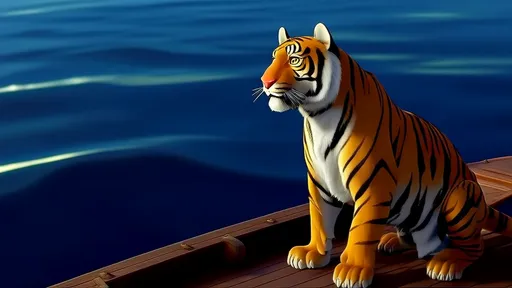
In the visually stunning world of Ang Lee's Life of Pi, the majestic Bengal tiger named Richard Parker emerges not just as a character, but as a digital marvel that redefined the boundaries of CGI. The film, based on Yann Martel's bestselling novel, presented an unprecedented challenge: to create a photorealistic animal that could share the screen with a human actor for the majority of the runtime—without ever revealing its artificial nature. What followed was a groundbreaking fusion of artistry and technology, where pixels were imbued with soul.

The journey to bring Richard Parker to life began with an audacious decision—to rely almost entirely on computer-generated imagery rather than using real tigers or animatronics. Rhythm & Hues Studios, the VFX team behind the tiger, faced a Herculean task. Tigers are among the most anatomically complex animals to replicate digitally, with their intricate muscle movements, fur dynamics, and expressive eyes. Early tests fell short; the creature either looked like a video game character or triggered the uncanny valley effect. The breakthrough came when animators shifted their approach—studying not just how tigers move, but why they move in specific ways.

For months, the team dissected hundreds of hours of tiger footage, consulting with animal behaviorists and even visiting sanctuaries to observe big cats up close. They discovered that a tiger's power lies in its contradictions—the way its muscles ripple with predatory tension one moment and dissolve into liquid grace the next. This duality became the cornerstone of Richard Parker's digital performance. Advanced muscle simulation software was developed to replicate subcutaneous tissue movement, while custom algorithms animated each of the 10 million individually rendered strands of fur, reacting authentically to wind, water, and Pi's touch.

Perhaps the most revolutionary aspect was the tiger's eyes. VFX supervisor Bill Westenhofer revealed that traditional CGI animal eyes tended to look glassy or dead. His team engineered a multi-layered corneal system that captured how real feline eyes refract light, complete with microscopic surface imperfections. When combined with motion-capture data from human actors (used for emotional reference), Richard Parker's gaze became hauntingly alive—conveying fear, curiosity, and even reluctant companionship without anthropomorphization.

The water sequences presented another Everest of technical challenges. Over 80% of the film takes place on a lifeboat adrift in the Pacific, requiring the CGI tiger to interact with constantly shifting waves. Rhythm & Hues built a proprietary fluid dynamics engine that allowed Richard Parker's fur to clump when wet, his paws to displace water realistically, and his body to maintain believable buoyancy. This attention to physicality paid off; during test screenings, audiences frequently asked how they trained a real tiger to perform such aquatic feats.

What elevates Richard Parker beyond technical achievement, however, is how the CGI creation serves the story's metaphysical themes. As Pi's primal mirror and spiritual companion, the tiger had to embody both mortal danger and divine mystery. The animation team studied religious iconography and predator-prey dynamics to craft a performance that feels mythic yet grounded. When Richard Parker disappears into the Mexican jungle without a backward glance—a moment that reduced many viewers to tears—the impact hinges entirely on the audience believing, on some visceral level, that they witnessed something real abandon them.

The legacy of this digital tiger reverberates through modern cinema. Life of Pi won the Academy Award for Best Visual Effects in 2013, beating heavyweight contenders like The Avengers and The Hobbit. More importantly, it demonstrated that CGI could carry emotional weight equal to live-action performances. Subsequent films like The Jungle Book and The Lion King remake built upon these innovations, but Richard Parker remains the benchmark for animal CGI—not just for its photorealism, but for its paradoxical humanity. In the end, the greatest magic trick wasn't making audiences believe in a fake tiger; it was making them mourn one.

Behind the scenes, the human cost of this achievement was staggering. Rhythm & Hues filed for bankruptcy during post-production, sparking debates about VFX artists' working conditions. Many animators worked 90-hour weeks to perfect Richard Parker's snarl or the way his ears twitched during sleep. This bittersweet reality adds another layer to the tiger's symbolism—he's not just a triumph of technology, but a monument to often-invisible artistic labor.

Today, as AI-generated imagery begins disrupting the visual effects industry, Richard Parker stands as a reminder that technical wizardry alone can't create lasting cinema magic. It took hundreds of artists pouring their obsession into every whisker and claw to make audiences feel, against all logic, that they'd shared a lifeboat with a wild creature. In an age where CGI floods every blockbuster, Life of Pi's tiger endures because he wasn't animated—he was believed into being.
Recommend Posts
Animal

Disney Animal Personification: The Evolution of a Century of Animation"

By /Aug 1, 2025

From the earliest black-and-white shorts to today’s CGI spectacles, Disney’s animated films have consistently charmed audiences with their ability to breathe human qualities into animal characters. This anthropomorphic tradition, now spanning over a century, reflects not just technological advancements but shifting cultural attitudes toward storytelling itself. What began as simple visual gags in the 1920s has evolved into complex narratives where furry, feathered, and scaled protagonists carry the emotional weight of Shakespearean dramas.
Animal

Young and Restless" Tiger: The Soul Shaping of CGI Technology

By /Aug 1, 2025

In the visually stunning world of Ang Lee's Life of Pi, the majestic Bengal tiger named Richard Parker emerges not just as a character, but as a digital marvel that redefined the boundaries of CGI. The film, based on Yann Martel's bestselling novel, presented an unprecedented challenge: to create a photorealistic animal that could share the screen with a human actor for the majority of the runtime—without ever revealing its artificial nature. What followed was a groundbreaking fusion of artistry and technology, where pixels were imbued with soul.
Animal

Bronze Animal Motifs: Symbolic Animals in Shang and Zhou Dynasty Sacrifices

By /Aug 1, 2025

The intricate animal motifs adorning Shang and Zhou dynasty bronze vessels whisper secrets of a lost spiritual world. These zoomorphic designs – far more than decorative elements – served as sacred intermediaries between humans and the divine during ceremonial rites that shaped early Chinese civilization.
Animal

Hokusai's Great Wave: The Struggle of Fishing Boats and Marine Life

By /Aug 1, 2025

The towering crest of Katsushika Hokusai's The Great Wave off Kanagawa has long been more than just a masterpiece of ukiyo-e—it is a frozen moment of tension between humanity and the untamed sea. Beneath the surface of this iconic woodblock print lies a narrative of struggle, survival, and the delicate balance between fishermen and the marine ecosystem they depend on. The wave, poised to crash upon two fragile oshokubune (fishing boats), becomes a metaphor for the relentless challenges faced by those who harvest the ocean's bounty.
Animal

Altamira Bison: The Vitality of Cave Paintings"

By /Aug 1, 2025

The Altamira bison figures stand frozen in motion upon the cavern's ceiling, their ochre and charcoal forms pulsing with an energy that transcends millennia. These are not mere paintings; they are living testaments to humanity's first attempts to capture the essence of life itself. Discovered in 1879 by a young girl whose astonished cry of "Papa, look! Oxen!" echoed through the cavern, the Altamira cave paintings revolutionized our understanding of Paleolithic art. The ceiling's undulating surface becomes part of the artwork – bulges transform into muscular shoulders, cracks accentuate charging limbs, and the very rock seems to breathe beneath the pigments.
Animal

The Specimen of Quagga: The Myth and Reality of the Half-Striped Zebra

By /Aug 1, 2025

The quagga, a peculiar half-striped zebra-like creature that once roamed the plains of South Africa, has long captured the imagination of scientists and historians alike. Its unique appearance—striped only on the front half of its body—made it one of nature’s most curious anomalies. Today, preserved quagga specimens in museums serve as silent witnesses to a species that vanished over a century ago, yet their legacy continues to spark debates about extinction, genetic resurrection, and the blurred lines between myth and reality.
Animal

Carolina Parakeet: The Only Extinct Parrot in North America

By /Aug 1, 2025

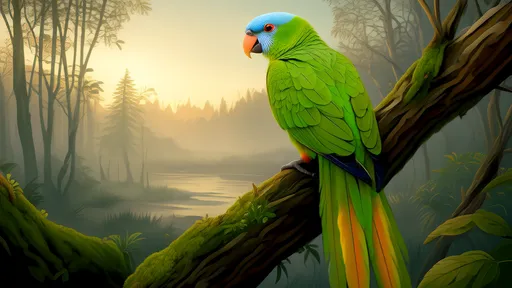
The Carolina Parakeet, a vibrant and once-abundant bird, holds the tragic distinction of being North America's only native parrot species to have gone extinct. Its story is one of beauty, ecological importance, and ultimately, human-induced demise. These striking green, yellow, and orange birds once filled the skies of the eastern United States, from the Ohio Valley to the Gulf of Mexico. Their disappearance serves as a sobering reminder of humanity's impact on the natural world.
Animal

Thylacine Filmography: The Black-and-White Files of the Last Individual

By /Aug 1, 2025

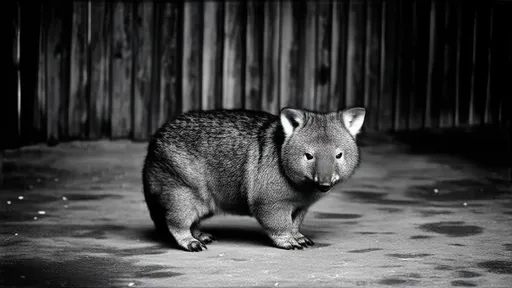
The last known thylacine, or Tasmanian tiger, died in captivity at Hobart Zoo on September 7, 1936. Its passing marked the extinction of a species that had roamed the Australian continent for millions of years. The few surviving fragments of film and photographs of this enigmatic creature have become haunting relics of a lost world. These grainy black-and-white images are all that remain of the thylacine, a marsupial predator that once held a unique place in Earth’s biodiversity.
Animal

Dodo Bird Truth: The Symbol of the First Recorded Extinct Animal by Humans

By /Aug 1, 2025

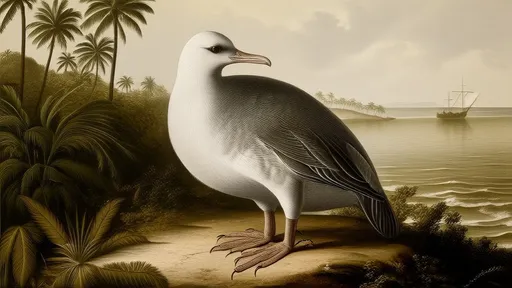
The story of the dodo bird stands as one of the most poignant symbols of human-caused extinction. This flightless bird, native to the island of Mauritius, was first encountered by Dutch sailors in the late 16th century. Within decades, the species vanished, leaving behind only fragmented records and a legacy that continues to haunt conservation efforts today. The dodo’s tragic fate marks it as the first widely recognized case of an animal driven to extinction by human activity, a sobering reminder of humanity’s impact on the natural world.
Animal

The Elegy of the Steller's Sea Cow: The 27-Year Extinction History in the Bering Sea

By /Aug 1, 2025

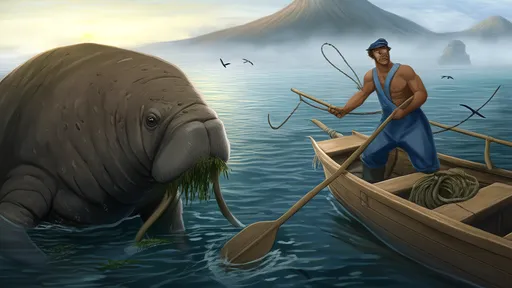
The waters of the Bering Sea once teemed with a gentle giant—the Steller’s sea cow. A massive marine mammal that could reach lengths of up to 30 feet, it was a docile creature, grazing on kelp in the shallow coastal waters. Yet, within a mere 27 years of its discovery by Europeans, the species was hunted to extinction. The story of the Steller’s sea cow is not just a tragic footnote in natural history but a stark reminder of humanity’s capacity to drive entire species to oblivion with breathtaking speed.
Animal

Acoustic Ecological Monitoring: Assessment of Forest Biodiversity

By /Aug 1, 2025

The rustling of leaves, the distant call of a bird, the faint hum of insects—these are the sounds that define a thriving forest. In recent years, scientists have turned their ears to these natural symphonies not just for their beauty, but for the wealth of information they hold. Acoustic ecological monitoring has emerged as a groundbreaking tool for assessing forest biodiversity, offering a non-invasive and scalable method to gauge the health of ecosystems. Unlike traditional surveys, which often rely on labor-intensive fieldwork, this approach leverages soundscapes to decode the intricate web of life hidden within forests.
Animal

De-extinction: Ethical Boundaries of Genome Editing

By /Aug 1, 2025

The concept of de-extinction, once confined to the realm of science fiction, has edged closer to reality with advances in genome editing technologies like CRISPR-Cas9. The idea of resurrecting species such as the woolly mammoth or the passenger pigeon raises profound ethical questions that straddle science, philosophy, and conservation. As scientists inch toward making de-extinction feasible, society must grapple with where to draw the line between scientific ambition and moral responsibility.
Animal

Animal Digital Twins: A VR Application for Protected Area Management

By /Aug 1, 2025

The concept of digital twins has transcended industrial applications and is now making waves in wildlife conservation. One of the most groundbreaking developments in this space is the use of Virtual Reality (VR) to create digital replicas of animal habitats within protected areas. This fusion of technology and ecology is redefining how conservationists monitor, analyze, and manage endangered species and their ecosystems.
Animal

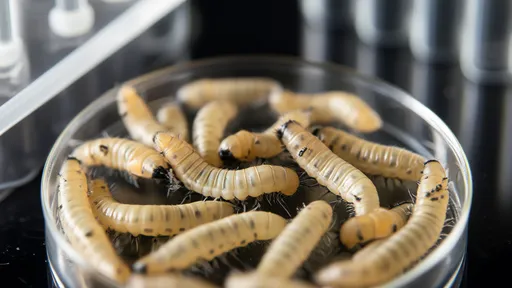
The Insect Protein Revolution: Organic Transformation of Black Soldier Fly Larvae

By /Aug 1, 2025

The global food system is undergoing a quiet revolution, one that crawls on six legs and thrives in decaying organic matter. Black soldier fly larvae (BSFL), the unassuming offspring of the Hermetia illucens fly, are emerging as nature’s most efficient protein factories, capable of transforming food waste into high-quality animal feed and fertilizer. This biological alchemy isn’t just a scientific curiosity—it’s becoming a cornerstone of the circular economy, offering solutions to some of humanity’s most pressing environmental challenges.
Animal

Coral Gene Editing: Breakthrough in Cultivating Thermotolerant Strains

By /Aug 1, 2025

In a groundbreaking development that could reshape the future of coral reef conservation, scientists have successfully employed gene-editing techniques to cultivate heat-resistant coral strains. This pioneering research offers a glimmer of hope for endangered reef ecosystems increasingly threatened by rising ocean temperatures due to climate change. The implications extend far beyond marine biology, potentially revolutionizing our approach to ecosystem preservation in an era of environmental instability.
Animal

Chinese Swallow Culture: The Auspicious Forecaster of Agricultural Civilization

By /Aug 1, 2025

In the vast tapestry of Chinese agricultural civilization, few creatures hold as much symbolic weight as the humble swallow. For millennia, these agile birds have been woven into the cultural consciousness as heralds of spring, bearers of good fortune, and living calendars for farming communities across China. Their annual migrations synchronized perfectly with planting seasons, making them natural prognosticators in an era before modern weather forecasting.
Animal

Egyptian Scarab: The Sun Worship of Dung Ball Rolling

By /Aug 1, 2025

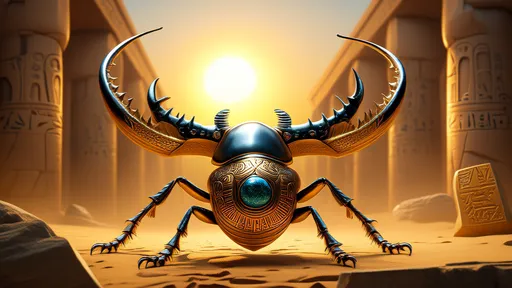
The ancient Egyptians held a profound reverence for the scarab beetle, an insect that might seem insignificant at first glance. Known scientifically as Scarabaeus sacer, this humble creature became a powerful symbol of creation, transformation, and the eternal cycle of life. At the heart of this symbolism lay the beetle’s peculiar habit of rolling dung into perfect spheres, an act that the Egyptians saw as a mirror of the sun’s journey across the sky. The scarab, therefore, was not just an insect but a living emblem of the divine.
Animal

Ecological Dilemma of Hanuman Temples in the Indian Monkey God Belief

By /Aug 1, 2025

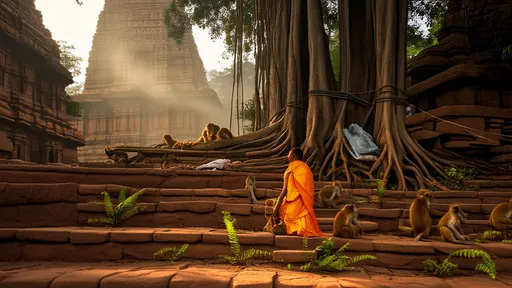
In the heart of India’s bustling cities and quiet villages, the presence of Hanuman, the revered monkey god, is unmistakable. Temples dedicated to him dot the landscape, drawing millions of devotees each year. Yet, beneath the spiritual fervor lies an ecological paradox that few pause to consider. The very creatures symbolizing Hanuman—the monkeys—are often at the center of human-wildlife conflicts, raising questions about the intersection of faith and environmental stewardship.
Animal

The Legend of Japan's Cat Island: Tashirojima's Maneki-neko Culture

By /Aug 1, 2025

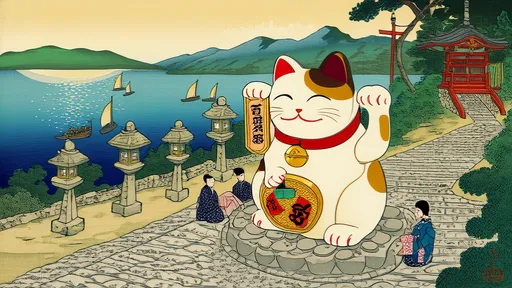
Nestled in the serene waters of Japan’s Miyagi Prefecture, Tashirojima, often referred to as "Cat Island," is a place where feline legends and cultural heritage intertwine. The island’s unique identity is deeply rooted in its population of cats, which outnumbers its human residents. But beyond the charming spectacle of cats roaming freely, Tashirojima holds a deeper significance—it is a living testament to Japan’s enduring love for cats and their symbolic role in prosperity and protection. The island’s connection to the maneki-neko, or "beckoning cat," adds a layer of mystique to its already enchanting allure.
Animal

Dutch Dairy Cow Art: Symbolism in the Golden Age Still Life Paintings

By /Aug 1, 2025

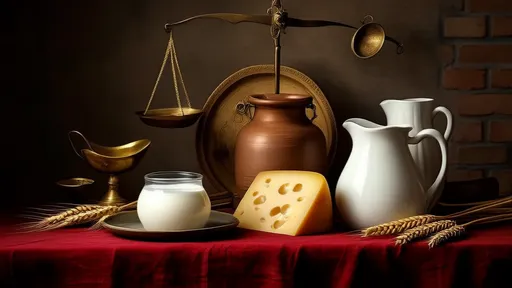
The Dutch Golden Age of painting, spanning roughly the 17th century, remains one of the most celebrated periods in art history. Among its many contributions, the genre of still life painting stands out as a particularly rich field of study. These meticulously composed works, often featuring an array of objects from luxurious foods to delicate glassware, were far more than mere displays of technical skill. They were dense with symbolism, offering viewers a window into the cultural, religious, and philosophical preoccupations of the time. The Dutch still life, or stilleven, became a language of its own, where every object carried multiple layers of meaning.