The rustling of leaves, the distant call of a bird, the faint hum of insects—these are the sounds that define a thriving forest. In recent years, scientists have turned their ears to these natural symphonies not just for their beauty, but for the wealth of information they hold. Acoustic ecological monitoring has emerged as a groundbreaking tool for assessing forest biodiversity, offering a non-invasive and scalable method to gauge the health of ecosystems. Unlike traditional surveys, which often rely on labor-intensive fieldwork, this approach leverages soundscapes to decode the intricate web of life hidden within forests.
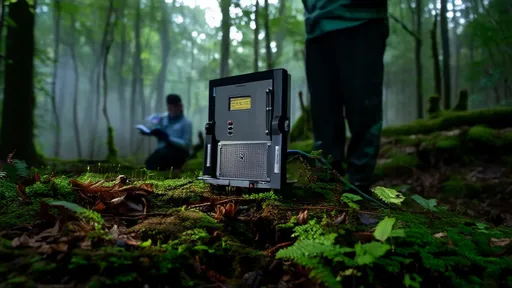
The concept is simple yet profound: every organism in a forest contributes to its unique acoustic signature. From the low-frequency rumbles of large mammals to the high-pitched chirps of crickets, these sounds form a complex tapestry that reflects the diversity of species present. By deploying autonomous recording units (ARUs) across vast or inaccessible areas, researchers can capture this auditory data over extended periods. The result is a rich dataset that, when analyzed with advanced algorithms, reveals patterns of species presence, behavior, and even interactions.
Why sound? The answer lies in its efficiency and inclusivity. Traditional biodiversity assessments often focus on visually conspicuous species, overlooking those that are nocturnal, camouflaged, or simply too small to be easily observed. Acoustic monitoring, however, captures vocalizations across a broad spectrum of taxa—birds, amphibians, mammals, and even some insects. This holistic approach provides a more complete picture of ecosystem health, making it particularly valuable in dense or remote forests where visual surveys are impractical.
One of the most compelling applications of acoustic monitoring is its ability to track elusive or endangered species. For instance, the haunting calls of the Bornean gibbon or the subtle echolocation clicks of bats can be detected and identified with precision, even in dense foliage. This capability is revolutionizing conservation efforts, enabling researchers to monitor population trends without disturbing fragile habitats. In Costa Rica, for example, long-term acoustic studies have documented the recovery of frog populations after habitat restoration, offering hope and actionable insights for conservationists worldwide.
But the power of acoustic data extends beyond species detection. The temporal patterns of soundscapes—how they change from dawn to dusk, or across seasons—provide clues about ecological dynamics. Dawn choruses, for instance, are not just a marvel to behold; they are a critical indicator of avian community structure. Similarly, the absence of certain sounds can signal environmental stress, such as pollution or climate change. By analyzing these patterns, scientists can identify shifts in biodiversity long before they become visually apparent.
Challenges remain, of course. The sheer volume of audio data generated by ARUs requires robust computational tools for processing and interpretation. Machine learning has stepped into this role, with algorithms trained to recognize species-specific calls amidst the cacophony of forest noise. Yet, even with these advancements, human expertise remains indispensable for validating results and interpreting nuanced acoustic behaviors. Moreover, standardization of methods is still evolving, as researchers grapple with questions about optimal recording durations, microphone placements, and analytical frameworks.
Despite these hurdles, the potential of acoustic monitoring is undeniable. In an era of rapid biodiversity loss, this technology offers a way to listen—literally—to the pulse of our planet’s forests. Projects like the Rainforest Connection, which repurposes old smartphones as acoustic sensors in threatened rainforests, demonstrate how scalable and accessible this approach can be. By transforming sound into data, and data into knowledge, we are unlocking new ways to protect the intricate and irreplaceable web of life that forests sustain.
Looking ahead, the integration of acoustic monitoring with other technologies—such as remote sensing and environmental DNA (eDNA) sampling—promises even deeper insights. Imagine a future where drones equipped with microphones and cameras map biodiversity in real-time, or where AI-driven sound analysis alerts rangers to illegal logging before it’s visible from the ground. This is not science fiction; it’s the trajectory of ecological research today. As we refine these tools, we edge closer to a world where conservation is not just reactive, but predictive and precise.
The forests are speaking. It’s time we learned to listen more closely.

By /Aug 1, 2025

By /Aug 1, 2025

By /Aug 1, 2025

By /Aug 1, 2025

By /Aug 1, 2025

By /Aug 1, 2025

By /Aug 1, 2025

By /Aug 1, 2025

By /Aug 1, 2025

By /Aug 1, 2025
By /Aug 1, 2025

By /Aug 1, 2025

By /Aug 1, 2025

By /Aug 1, 2025

By /Aug 1, 2025

By /Aug 1, 2025

By /Aug 1, 2025

By /Aug 1, 2025

By /Aug 1, 2025

By /Aug 1, 2025
