In the vast tapestry of Chinese agricultural civilization, few creatures hold as much symbolic weight as the humble swallow. For millennia, these agile birds have been woven into the cultural consciousness as heralds of spring, bearers of good fortune, and living calendars for farming communities across China. Their annual migrations synchronized perfectly with planting seasons, making them natural prognosticators in an era before modern weather forecasting.
The relationship between swallows and Chinese farmers transcends mere practicality. Ancient texts like The Book of Songs contain numerous references to swallows as seasonal markers. When their forked tails first appeared against the spring skies, villages knew to prepare their fields. This intimate connection between avian behavior and agricultural rhythms elevated swallows from common birds to cultural icons.
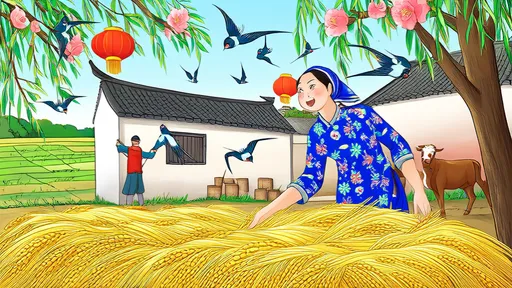
Traditional Chinese architecture often incorporated swallow motifs into roof designs, particularly in northern China where their mud nests commonly adorned eaves. Farmers considered a nesting swallow family to be the ultimate blessing - their presence promised protection against pests and misfortune. The birds' insectivorous habits made them natural allies in crop protection, creating a perfect symbiotic relationship between human and avian neighbors.
Regional folklore abounds with swallow-related proverbs and sayings. "When swallows fly low, prepare for rain to flow" remains common meteorological wisdom in rural areas. Their flight patterns were studied as carefully as modern farmers read weather apps today. In southern China, swallows arriving earlier than usual signaled an early spring, prompting adjustments to planting schedules.
The cultural reverence for swallows manifests beautifully in traditional art forms. Porcelain designs from the Ming and Qing dynasties frequently featured swallow motifs, often paired with willow branches or peach blossoms to symbolize spring's arrival. Paintings depicting "swallows in spring breeze" became shorthand for renewal and hope after winter's hardship - emotions deeply understood by agrarian societies.
Modern China's rapid urbanization has transformed but not erased this ancient relationship. While fewer farmers rely on swallow sightings for planting cues, the birds maintain their cultural status. Annual swallow festivals still occur in Shandong and Henan provinces, celebrating the birds' return with traditional dances and poetry recitals. Conservation efforts now protect swallow nesting sites, recognizing their dual importance as ecological assets and cultural heritage.
Scientific studies have validated some traditional beliefs about swallow behavior. Researchers confirm their sensitivity to atmospheric pressure changes explains their weather-predicting abilities. Agricultural scientists note how swallow populations naturally correlate with pest control needs, proving ancient farmers observed these relationships accurately through generations of careful observation.
Contemporary artists continue drawing inspiration from swallow symbolism. A notable example is the 2022 Winter Olympics mascot Bing Dwen Dwen, whose design subtly incorporated swallow elements to represent spring's promise following winter's challenges. This modern interpretation demonstrates how deeply swallow imagery remains embedded in China's cultural consciousness.
Environmental changes now threaten this millennia-old relationship. Climate shifts disrupt traditional migration patterns, while urban sprawl eliminates nesting habitats. Conservationists work to preserve traditional swallow nesting sites, recognizing their cultural significance extends beyond ecological value. Some villages maintain swallow towers - artificial nesting structures that continue ancient coexistence traditions.
The swallow's enduring place in Chinese culture speaks to agricultural civilization's profound connection with nature's rhythms. These birds became living almanacs, their annual appearances marking time with reliability that shaped human activities. In an age of climate uncertainty, perhaps we have something to learn from this ancient partnership between farmers and their feathered forecasters.
Scholars note how swallow symbolism differs from other auspicious birds in Chinese culture. Unlike the mythical phoenix representing imperial power or the crane symbolizing longevity, the swallow's significance stems from its tangible, observable relationship with human survival. This grounded symbolism made swallows particularly beloved among common people rather than just literary or aristocratic circles.
Traditional farming calendars like the 24 Solar Terms system align remarkably with swallow behavior. The "Awakening of Insects" solar term in early March typically coincides with swallows' return to northern China. Such precise correlations between avian biology and agricultural practice demonstrate how deeply ancient Chinese farmers understood their ecosystem.
Folktales often portrayed swallows as moral teachers. One widespread story tells of swallows refusing to nest with dishonest families, reinforcing Confucian values through natural observation. Another legend claims swallows gained their forked tails by carrying messages of hope between heaven and earth during a great flood - explaining their sacred status in some rural traditions.
Even China's culinary traditions reflect swallow reverence. While some cultures consume bird's nest soup made from swiftlet nests, traditional Chinese ethics generally forbade disturbing swallow nests due to their auspicious associations. Historical records show imperial decrees protecting swallows during nesting season, with penalties for those harming the birds or their homes.
The linguistic legacy persists in modern Mandarin. The character for swallow (燕 yàn) appears in numerous positive idioms and place names. "Swallow's happiness" (燕乐) became a poetic expression for domestic bliss, referencing how swallow pairs return yearly to the same nest - a model of marital fidelity in traditional values.
As China balances modernization with cultural preservation, the swallow remains a potent symbol of this negotiation. Urban planners increasingly incorporate swallow-friendly designs into new developments, while educational programs teach children about this living link to their agricultural heritage. The swallow's story ultimately reflects China's broader narrative - respecting ancient wisdom while adapting to contemporary realities.

By /Aug 1, 2025

By /Aug 1, 2025
By /Aug 1, 2025
By /Aug 1, 2025
By /Aug 1, 2025
By /Aug 1, 2025
By /Aug 1, 2025
By /Aug 1, 2025
By /Aug 1, 2025

By /Aug 1, 2025

By /Aug 1, 2025

By /Aug 1, 2025

By /Aug 1, 2025
By /Aug 1, 2025

By /Aug 1, 2025
By /Aug 1, 2025
By /Aug 1, 2025

By /Aug 1, 2025
By /Aug 1, 2025
By /Aug 1, 2025
